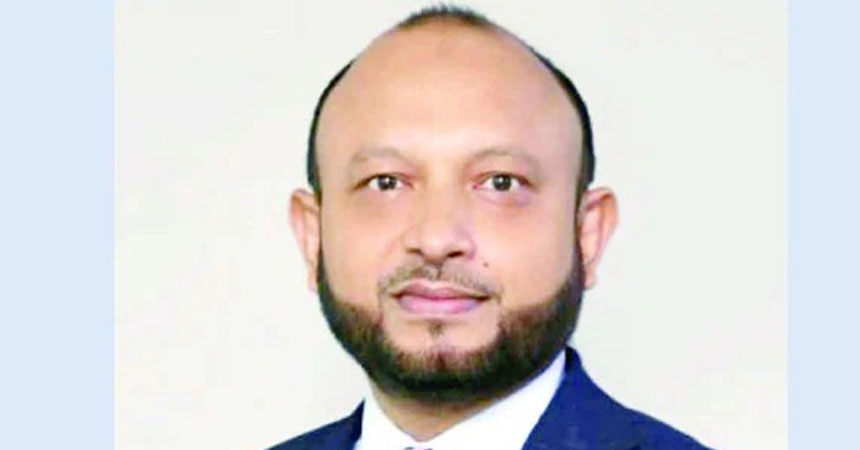
In a recent interview, Sikder said ensuring customers can access their money when needed is one of the bank’s top priorities.
“A customer keeps their hard-earned money in a bank to use it when necessary. Not being able to provide that money when they need it is also painful for bankers,” he said.
According to the bank, customers with personal savings and current accounts can now deposit and withdraw money according to their needs. Customers can also withdraw the full balance from their accounts if they wish. Arrangements have also been made to ensure regular profit payments for customers holding monthly profit-based accounts.
Customers with term deposits, DPS and monthly savings schemes can also withdraw their principal deposits if they do not wish to continue banking with the institution, the MD said.
The bank had initially expected that many customers would withdraw their entire deposits once normal transactions resumed. However, the actual response has been more positive, Sikder said.
Many customers have chosen to keep their money with the bank and continue transactions, while some have expressed interest in maintaining their relationship with the bank if regular profit payments continue. He described the trend as a positive signal for the institution.
Sikder said customers who remained with the bank despite prolonged restrictions would play an important role in rebuilding its future operations.
He also noted that bank employees previously felt uncertain about how they could serve customers arriving at branches. With transaction facilities gradually expanding, employees are now becoming more confident and motivated to work.
The bank has also received positive feedback from expatriate customers, particularly some customers living in the Middle East. According to Sikder, several expatriate customers have contacted the bank by phone and message to express satisfaction with the improvement in services.
Many expatriate customers do not want to withdraw their deposits and instead wish to continue their banking relationship with Sammilito Islami Bank, he said.
The bank is also gradually expanding its business activities alongside restoring individual banking services. Its key business areas include retail banking, small and medium-sized enterprises and corporate banking.
Some business customers had increased their transactions with other banks amid the recent restrictions. The bank now plans to strengthen relationships with those customers and encourage them to resume business with the institution.
Sikder said the bank would initially focus on strengthening ties with existing and trusted customers, particularly those who previously conducted significant business through the bank. After regaining those customers, the bank plans to focus on attracting new clients.
He expressed hope that once operations become fully normal, the bank will be able to use its stronger capital base to expand its business further.
As part of its efforts to provide integrated services, Sammilito Islami Bank plans to open a model branch in Gulshan, Dhaka, by September 30.
The branch will operate under the Sammilito Islami Bank brand and will provide services to customers of all five former banks that have been brought together under the new institution.
Sikder said the concept behind the model branch is to provide customers of the former banks with services from a single location. In some areas, several branches of the former banks are located close to one another, and the bank plans to gradually rationalise and integrate such branches based on operational requirements.
The Gulshan branch will be the first step in that process, with plans to gradually increase the number of such integrated branches.
The bank also aims to utilise its existing branches, sub-branches, ATM network and employee capabilities to build Sammilito Islami Bank into a strong and modern financial institution.
Sikder said the bank is prioritising quality customer service as well as a disciplined and professional working environment.
He also stressed the broader economic importance of restoring confidence and discipline in the financial sector. According to him, expanding banking services can stimulate local economic activity and bring people outside the formal banking system into formal financial services.
The bank plans to introduce technology-driven and quality banking services in the future, with the goal of building an institution that customers feel confident about and employees feel proud to work for.
Expressing gratitude to customers who remained with the bank during the difficult period, Sikder said their trust would serve as the foundation for establishing Sammilito Islami Bank as a strong and credible banking institution.