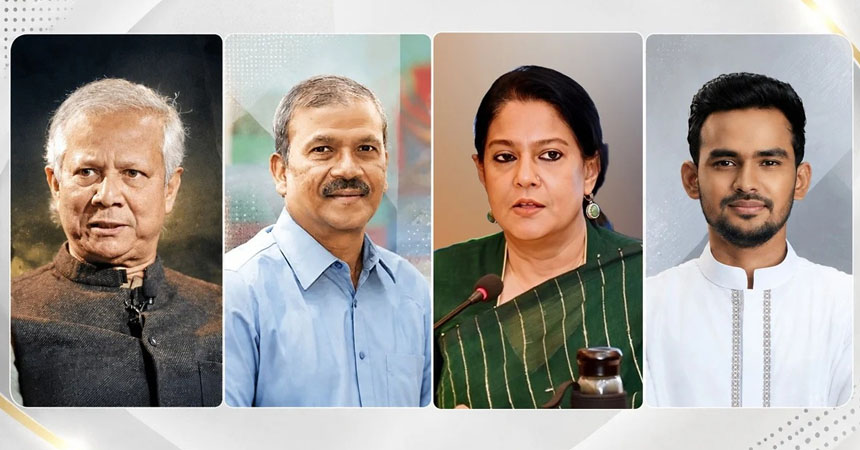
At a rally in Kushtia on August 16, Jamaat Member of Parliament Mufti Amir Hamza reportedly characterized terms such as 'Razakar' and 'Al-Badr' as an "Indian drama." Observers note that reducing complex historical records to anti-India political narratives fails to address documented historical accounts.
The history of 1971 does not rely on a single narrative from any single nation, government, or political party. Events from the Liberation War are documented across primary sources, international reports, historical research, and judicial records.
Judicial Records and Historical Documentation
The judicial proceedings of Bangladesh's International Crimes Tribunal (ICT) form a substantial repository of legal and historical documentation. In its ruling on the Kamaruzzaman case, the Supreme Court described Al-Badr as an armed structure associated with Jamaat and its student wing, Islami Chhatra Sangha. The judgment also reviewed linkages between Jamaat leaders, Pakistani military authorities, and the formation of Al-Badr and Al-Shams.
Similarly, the judgment in the Ghulam Azam case examined evidence regarding Jamaat’s political stance in 1971, the Peace Committees, and the activities of auxiliary forces. While aspects of tribunal proceedings have been subject to legal and political debate, analysts emphasize that court-reviewed historical evidence cannot be dismissed merely as external narrative-building.
Widely referenced historical sources, including Banglapedia, describe Al-Badr as a paramilitary force formed under the auspices of the Pakistan government during the 1971 war, documenting the actions of auxiliary forces alongside the Pakistani military.
The December 1971 Intellectual Killings
The execution of Bangladeshi intellectuals in December 1971 remains a deeply sensitive chapter in national history. Recent statements from Jamaat leadership have raised fresh debate regarding these events. On December 14, 2025, a senior Jamaat leader asserted that the intellectual killings were part of a planned conspiracy by Indian military and intelligence agencies, arguing that Pakistani forces and auxiliary units were preparing to surrender or flee and thus could not have carried out the executions.
While political figures hold the right to present arguments, reversing established historical accounts requires verifiable documentary evidence or fresh research. Attempting to reassign responsibility for major historical events through political statements alone continues to draw scrutiny.
Contradictions in Apology and Historical Positions
An inconsistency emerges when examining Jamaat’s recent political positioning:
- May 2025 Apology: Following the Supreme Court's acquittal of ATM Azharul Islam in a crimes against humanity case in May 2025, top Jamaat leadership tendered an unconditional apology to individuals harmed by the actions of the party or its workers.
- October 2025 Statement: In October, the party's top leader offered an apology for any suffering caused by Jamaat since 1947, acknowledging that Jamaat opposed the breakup of Pakistan in 1971 and stating that the aspirations of the Bangladeshi people should have been respected at the time.
While acknowledging past errors marks a notable shift, analysts differentiate between general apologies and detailed historical accountability. When party leaders offer apologies on one hand while challenging conventional historical accounts of events like the intellectual killings on the other, questions arise as to whether Jamaat has systematically reassessed its past or merely adapted its political language.
Furthermore, legal experts note that while ATM Azharul Islam’s acquittal in May 2025 represents an individual judicial outcome under the rule of law, a single criminal case acquittal does not resolve broader historical inquiries regarding a political party's collective stance in 1971.
Reform versus Rebranding
Political organizations possess the capacity to restructure, adopt new principles, and distance themselves from previous leadership decisions. However, genuine transformation relies on an transparent accounting of the past.
If Jamaat seeks to demonstrate a fundamental departure from its 1971 political position, observers argue the party must clearly articulate its recognition of established historical facts, acknowledge the suffering of victims during the Liberation War, explicitly disavow its 1971 alignment with Pakistan, and ensure those positions hold no place in its future platform.
Without such clarity, attempts to move forward while simultaneously dismissing documented history as external conspiracy risk being viewed as political rebranding rather than self-reflection.
The Relevance of 1971 to Younger Generations
A common assertion suggests that younger generations are less concerned with the history of 1971. While younger citizens may question the political exploitation of the Liberation War or reject mono-causal interpretations, persistent public debates demonstrate that 1971 remains central to Bangladesh's national identity.
The history of the Liberation War does not belong to any single political party—whether the Awami League, BNP, or Jamaat. It belongs to those who fought, lost lives, suffered displacement, or endured the war's consequences.
Jamaat maintains the right to participate in democratic politics, field candidates, and engage voters. However, democratic participation does not grant political ownership over history. The party faces two choices: either continue attributing uncomfortable history to external conspiracies, or systematically confront its past, acknowledge documented realities, and demonstrate a clear break from its historical legacy.
Ultimately, 1971 cannot be rewritten. While historical interpretation remains open to research and debate, documented events cannot be erased for political convenience. Real political evolution begins with confronting history as it occurred.