On April 22, 2025, a terrorist attack in Pahalgam, Jammu and Kashmir, killed 26 people. India blamed Pakistan-based militants for the attack. Soon afterward, New Delhi announced that the Indus Waters Treaty would remain in abeyance until Pakistan credibly and irrevocably ends its support for cross-border terrorism.
The significance of India's decision goes far beyond water sharing. It signals that New Delhi no longer wants to view its deteriorating security relationship with Pakistan entirely separately from other areas of bilateral cooperation.
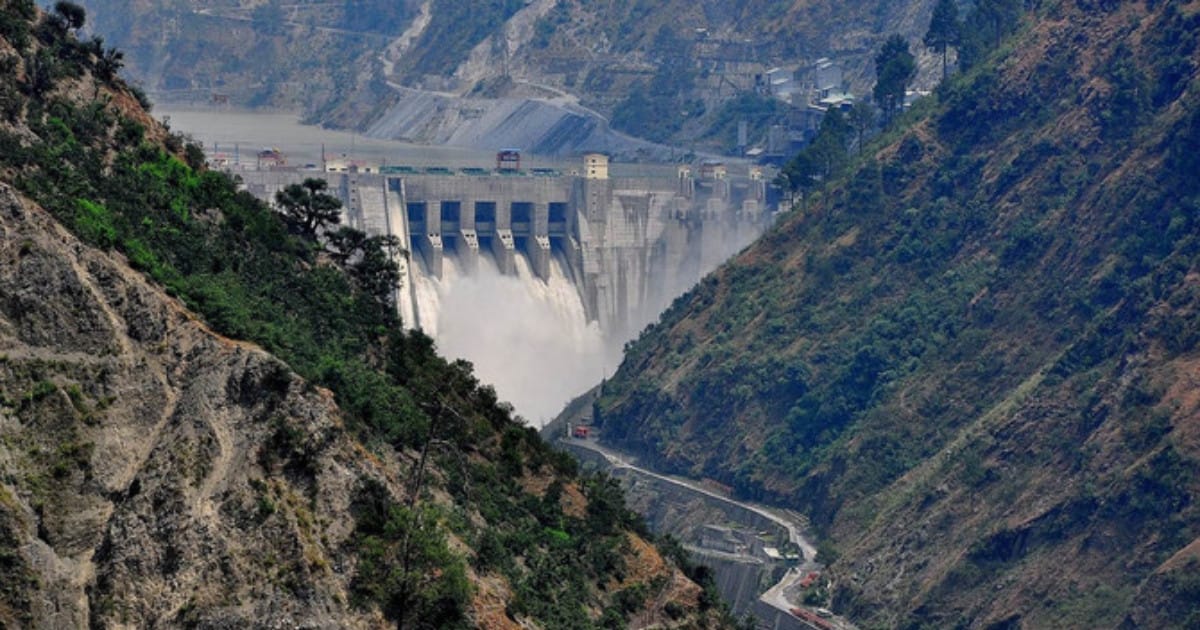
The dispute over the treaty has now also entered the realm of international law. On August 31, 2026, following Pakistan's application, an international arbitration tribunal established under the treaty ruled that the Indus Waters Treaty remains in force and cannot be suspended or terminated unilaterally by India. The tribunal also imposed certain interim restrictions concerning India's Ratle hydropower project.
Pakistan welcomed the ruling, while India rejected it. New Delhi said it does not recognise the arbitration process and therefore does not accept the tribunal's authority to rule on India's sovereign decisions.
As a result, the dispute is no longer confined to questions of water allocation or hydropower projects. It now involves international law, national security and the deepening crisis of trust between the two countries.
The Indus Waters Treaty was signed in 1960 with the World Bank's mediation. Under the agreement, Pakistan received the principal rights to the waters of the Indus, Jhelum and Chenab rivers, while India received greater rights over the Ravi, Beas and Sutlej. The treaty also allows both countries to use waters of the other's rivers under specific conditions.
Despite wars, military tensions and political disputes, the treaty remained in force for decades. It has therefore often been regarded internationally as one of the more successful examples of water cooperation between rival states.
But the circumstances have changed significantly. Both countries have larger populations and greater water demand, while the effects of climate change have intensified. At the same time, the security relationship between India and Pakistan has become increasingly complex.
At first glance, India's decision could be seen simply as a response to a terrorist attack. But New Delhi's argument is broader.
India has long accused Pakistan-based militant groups of involvement in attacks, including those in Mumbai, Uri, Pulwama and, most recently, Pahalgam. Pakistan has rejected India's allegations.
From India's perspective, Pahalgam was not an isolated incident but part of a longstanding security problem. New Delhi therefore believes that water, trade and other forms of cooperation can no longer necessarily be separated from the security relationship.
There is, however, an important legal distinction. A terrorist attack does not automatically invalidate an international treaty. India has also described its action as keeping the treaty in abeyance rather than permanently terminating it, leaving open the possibility of restoring cooperation if circumstances change.
A fundamental principle of international law is that treaties must be honoured by the states that enter into them. This principle is essential to the stability of international relations.
At the same time, international law recognises circumstances in which treaties may be suspended, modified or terminated. Serious breaches and fundamental changes of circumstances are among the issues considered in international treaty law.
International politics has also seen states withdraw from longstanding agreements because of changing national security or strategic considerations. The United States, for example, withdrew from the Anti-Ballistic Missile Treaty with the Soviet Union in 2001 and later from the Intermediate-Range Nuclear Forces Treaty with Russia in 2019.
The legal and political validity of such decisions can be debated. But they demonstrate that states do not always treat existing treaties as immune from changing strategic realities.
For Pakistan, the stakes are particularly high. The Indus river system is vital to its agriculture, irrigation and food security, making the treaty far more than an ordinary water-sharing agreement. It represents a key pillar of Pakistan's long-term water security.
That explains Islamabad's concern following India's announcement. New Delhi, meanwhile, argues that the security relationship has deteriorated to a point where treaty benefits can no longer be considered independently of broader bilateral relations.
The arbitration ruling has added an important dimension to the legal dispute. But whether it can help rebuild political trust between the two countries remains uncertain.
The underlying crisis is much broader than the interpretation of a single treaty. Terrorism, border security, Kashmir and deep mutual distrust all remain central to India-Pakistan relations.
India's position suggests that restoring normal water cooperation will require improvement in the broader security environment. For Pakistan, however, preserving the Indus Waters Treaty is directly linked to its water security.
The future of the treaty will therefore not be determined by a legal ruling alone. Political decisions in both capitals will also be crucial.
If India concludes that the security situation has improved, space could emerge for renewed engagement over the treaty. Similarly, effective steps by Pakistan to address India's concerns over cross-border terrorism could potentially alter the situation.
After 66 years, the Indus Waters Treaty is facing one of its most serious tests. It once provided a framework for water cooperation even amid war and hostility. The question now is whether a legal framework alone is sufficient to preserve that cooperation when political trust between the two countries has deteriorated so sharply.
The rules governing water sharing may be written in the treaty. But maintaining the treaty requires political trust—and that may now be the biggest challenge of all.
The future of the Indus Waters Treaty, therefore, is no longer simply about water. It is increasingly a test of the future of India-Pakistan relations, national security policy and the possibility of rebuilding trust between two deeply adversarial neighbours.