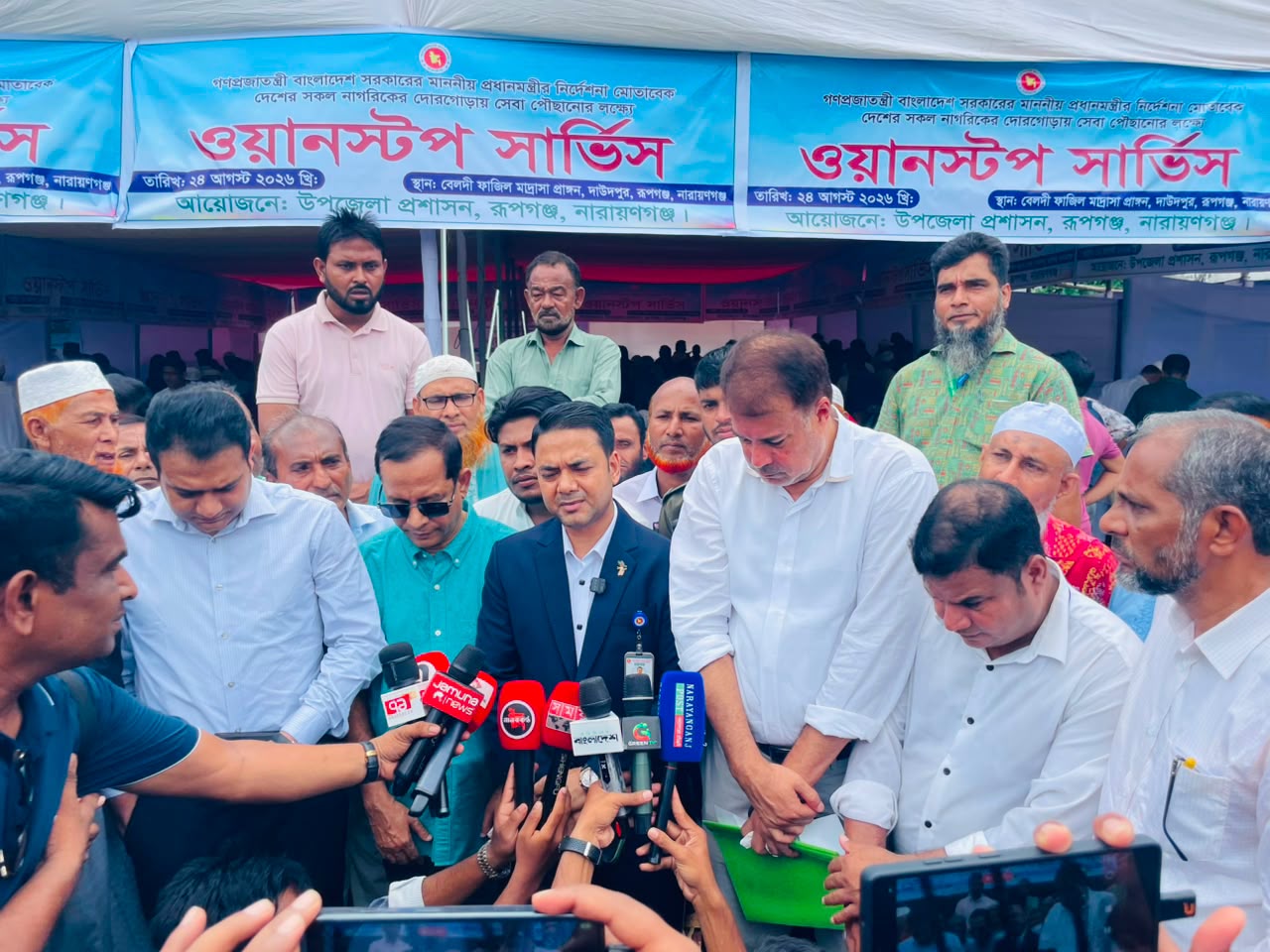
A day-long integrated public service center was set up at the Beldi Fazil Madrasa grounds, bringing together booths from major government departments—including health, land, national identification (NID), agriculture, livestock, fisheries, social welfare, and election offices. Approximately 9,000 citizens from remote communities accessed services directly at the venue.
Ground-Level Impact and Citizen Relief
For residents, the initiative significantly reduced transit times, travel expenses, and physical strain associated with traveling to the central upazila administration:
NID Corrections: 55-year-old Falani Begum and resident Rashida Begum successfully processed their national identity card corrections locally, avoiding the 1.5-hour commute to the upazila headquarters.
Livestock Care: Ashrafuzzaman Farid, a local farmer, brought his cattle to the livestock booth for medical treatment, noting that accessing regional livestock officers locally saved significant transport costs.
Agricultural Advice: Safed Ali, over 60 years old, received direct farming consultation from visiting agriculture officers on-site.
Dr. Tasveer Jobayer, Upazila Health and Family Planning Officer, highlighted the unprecedented nature of the deployment, noting that bringing doctors, administrative personnel, and specialized public offices to remote field locations represents a major shift in public service delivery.
Administrative Planning and Scalability
The initiative was planned and spearheaded by Rupganj Upazila Executive Officer (UNO) Saiful Islam Joy. To ensure smooth operations, dedicated service counters were arranged for hospital facilities, land administration, and administrative registries.
"Daudpur is a remote union in our upazila," UNO Saiful Islam Joy stated. "Traveling to the upazila headquarters or regional hospitals is difficult for many, especially elderly or physically impaired citizens, while others face high transportation costs. We established specialized service booths to resolve their issues locally."
Administrative Official Ashikur Rahman explained that the initiative builds on the upazila's 'Project One Thousand' program, which previously provided skills training and financial assistance to 1,000 local youth.
Following the success of the Daudpur deployment, upazila officials announced plans to replicate the mobile administrative service model across all remaining unions and municipalities within Rupganj.
The event was attended by local political representatives, including Rupganj Upazila BNP President Mahfuzur Rahman Humayun and General Secretary Bashiruddin Bachchu, alongside senior officials from various government departments.