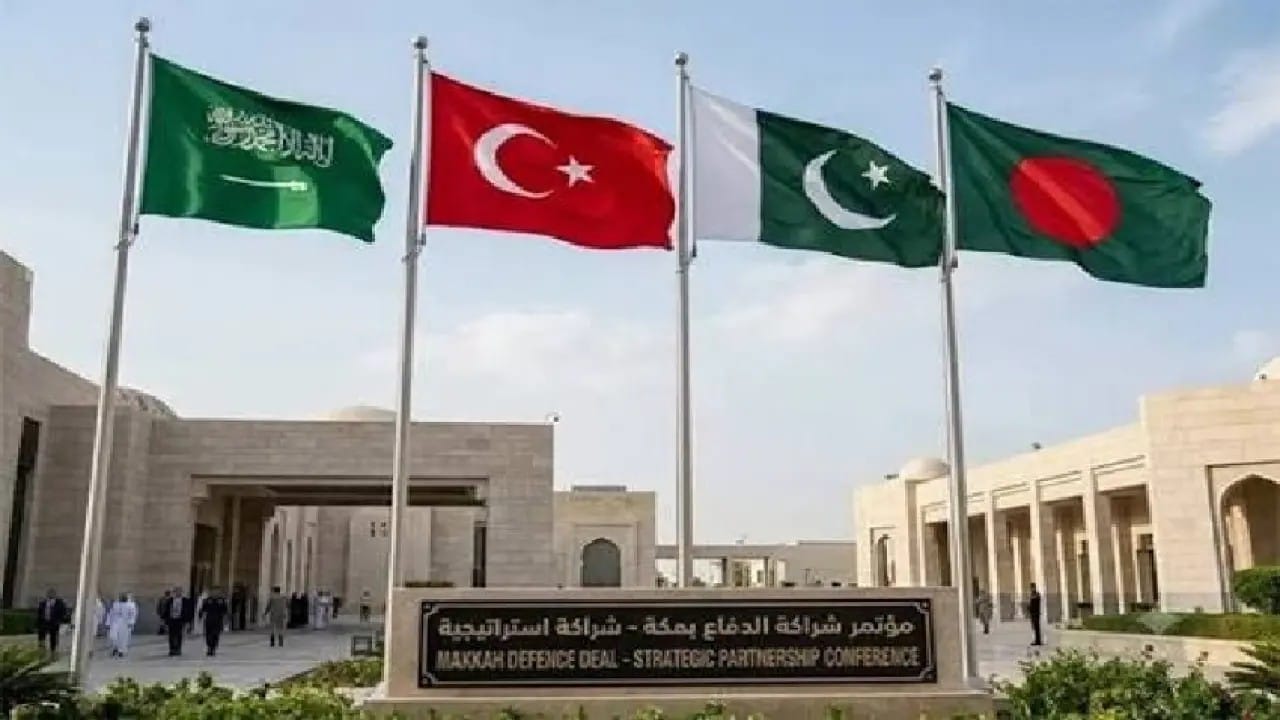

The defense agreement—which stipulates that an armed attack on any of the three member states will be treated as an attack on all—has drawn comparisons to NATO’s Article 5. However, analysts caution that Bangladesh must independently evaluate its own national security priorities before aligning with foreign strategic blocs.
Core Strategic and Security Risks
Security analysts and foreign policy scholars have highlighted several key concerns regarding potential membership:
Geopolitical Balancing & Foreign Policy: Air Commodore (Retd.) Ishfaq Ilahi Choudhury emphasized that Bangladesh has traditionally maintained a policy of non-alignment and "friendship to all, malice towards none." Joining a military alliance dominated by West Asian and South Asian regional powers risks embroiling the nation in external conflicts unrelated to its immediate defense needs.
Impact on Neighboring & Regional Ties: Bilateral relations with India—encompassing trade, energy imports, and water-sharing negotiations—as well as diplomatic ties with Iran could face severe friction if Bangladesh alters its defense stance.
Absence of Shared Border & Threat Perception: Unlike Pakistan, Saudi Arabia, and Turkey, which face immediate localized security challenges along their borders, Bangladesh does not share similar defense vulnerabilities with the pact’s founding members.
Diplomatic Preconditions: Humayun Kabir, former ambassador and President of the Bangladesh Enterprise Institute, noted that any discussion is premature since it remains unconfirmed whether Bangladesh has received a formal invitation to join the framework.
Economic and Public Consultation Imperatives
Independent researcher Altaf Parvez noted that the alliance carries significant economic weight, given the concentration of capital in the Gulf region amid shifting Middle Eastern security dynamics. However, he warned that escalating militarization could place severe economic strains on smaller nations like Bangladesh.
Professor Sabbir Ahmed of Dhaka University’s Political Science Department emphasized that any shift toward a military pact requires thorough risk assessments, institutional review, and public transparency. Experts collectively stress that foreign policy decisions of this magnitude must be grounded in objective data and long-term national interest rather than immediate diplomatic overtures.