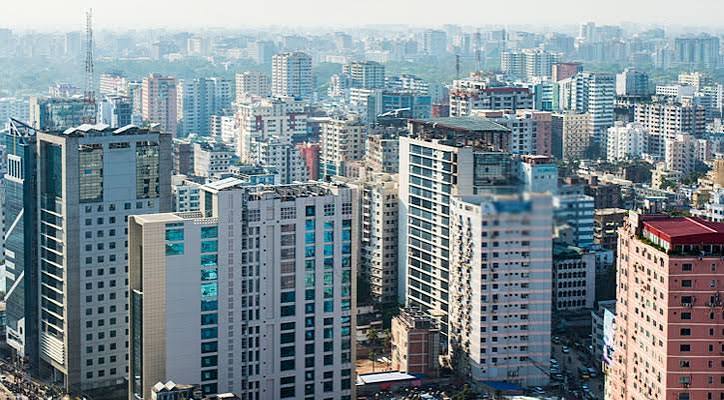
The housing crisis is particularly acute in Dhaka. According to World Bank data, Bangladesh is adding roughly 250,000 to 300,000 units to its housing backlog every year. Addressing the crisis, therefore, will require more than simply increasing the number of buildings. The country must also consider how housing can be made smarter, greener and more affordable over the long term.
The urban development experiences of countries such as Japan, South Korea and Singapore offer valuable lessons. Japan, despite the devastation it suffered in the aftermath of war, has transformed itself over the past five to six decades. Seoul and Singapore, too, have developed into modern and liveable cities despite limited resources and significant challenges.
These examples can serve as sources of inspiration for Bangladesh. But their models cannot simply be copied. Bangladesh must develop its own strategies by taking into account its economic capacity, resource constraints and unique urban realities.
Bangladesh has been discussing smart cities and smart housing for years. Yet progress remains limited compared with expectations, while in some areas the situation has become even more complicated.
The time has therefore come to move beyond discussions about plans and policies and focus on practical measures that can increase housing supply while improving its quality.
Energy Efficiency at the Core
Energy management should be a key component of this effort. Around one-third of the country’s total energy consumption takes place in the residential sector. Making residential buildings smarter, greener and more energy-efficient could therefore generate significant energy savings at the national level.
Smart housing should not be defined simply by the use of modern technology, solar panels or digital gadgets. At its core, a smart building should be designed to maximise natural light and ventilation, reduce water and electricity consumption, and minimise maintenance and operating costs throughout its life cycle.
This makes passive design strategies particularly important from the earliest stages of construction.
Building orientation, natural lighting, ventilation and heat control can all be incorporated at the design stage. Rajuk and other development authorities, along with relevant professionals, need to play a stronger role in making such considerations an integral part of building design and approval.
Other measures—including solar energy, energy audits, reduced electricity consumption and water-saving systems—can also be introduced. Many of these initiatives do not necessarily require massive technological investment and can be implemented gradually.
What is needed most is proper planning, policy priority and effective enforcement.
Location Matters as Much as the Building
A building cannot be considered smart simply because of what is inside it. Its location is equally important.
An environmentally friendly residential building may still impose a high cost on its residents if it is located far from workplaces, schools, markets, healthcare facilities and other essential services. Long commutes increase transportation costs, fuel consumption and carbon emissions.
Transport and infrastructure must therefore be integrated into smart housing strategies.
How close essential services are to residential areas, and whether people can reach them on foot or through convenient public transport, should be considered important indicators of a sustainable city.
This approach can help reduce both household expenses and pressure on the environment.
Financing Remains a Major Challenge
Financing is another critical component of smart cities and sustainable housing.
Mortgage finance in Bangladesh stands at only around 1.898 percent of GDP, compared with roughly 30 percent in China and more than 50 percent in Malaysia. The gap illustrates how closely housing and urban development are linked to long-term financing.
Increasing housing supply alone will not be enough. Bangladesh must also expand people’s purchasing capacity, develop long-term housing finance, strengthen mortgage systems and make financing available on more accessible terms.
If housing becomes increasingly unaffordable for ordinary people, achieving sustainable urbanisation will remain difficult.
Learning from Seoul, Japan and Singapore
The experience of Seoul, Japan and Singapore demonstrates that significant improvements in urban management are possible even with limited resources when governments combine sound policies, long-term planning and practical implementation.
Bangladesh needs to determine its own priorities in the same way, taking its specific circumstances into account.
The country already has some of the necessary institutional and policy foundations. The Bangladesh National Building Code provides building guidelines, while institutions such as the Sustainable and Renewable Energy Development Authority work on sustainable and renewable energy. Bangladesh also has strategies under its Nationally Determined Contributions aimed at greening development and reducing carbon emissions.
In other words, the country does not lack a basic framework for planning, measurement and implementation.
The bigger challenge is implementation, large-scale adoption and financing.
The existence of policies and guidelines means little if they are not effectively enforced in practice.
From Housing Supply to Integrated Urban Planning
The first priority in developing smart and sustainable housing should therefore be to ensure an adequate supply of homes.
The next step should be to make those homes energy-efficient, environmentally friendly, affordable and compatible with people’s everyday needs.
Housing, financing, transport, infrastructure and the environment should not be treated as separate policy areas. They need to be brought together within an integrated urban planning framework.
Smart urbanisation is not a luxury. It is becoming a necessity for the future of urban life.
For Bangladesh, the challenge is to be strategic and realistic from the outset. The stronger the connection between planning and implementation, and between housing and long-term financing, the faster the country can move towards more sustainable, affordable and liveable cities.