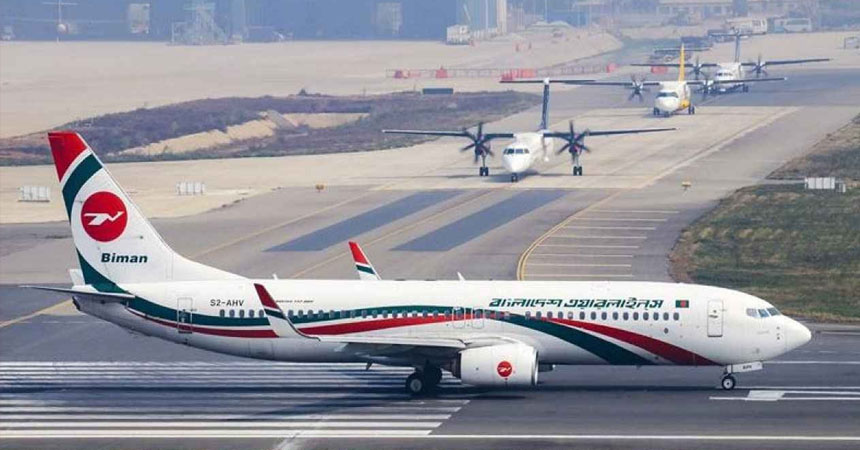
Despite multiple directives and extended deadlines issued by CAAB, operating airlines and ground-handling agencies have repeatedly failed to comply. Airside ground incidents in recent years highlight the urgency of the order. In November last year, an Air India Boeing aircraft's nose wheel was damaged after being hit by a pushcart at HSIA, forcing the cancellation of the flight. Previous accidents include a 2022 collision between two Boeing aircraft during hangar towing and a US-Bangla trolley impacting a parked plane.
Under CAAB’s newly established CNS-ATM and Advanced Surface Movement Guidance and Control System (A-SMGCS), ground vehicles must be fitted with VTS trackers to enable real-time tracking by Air Traffic Control (ATC). While passenger aircraft carry built-in identification transponders, ground support vehicles require individual trackers so control tower radars can monitor their position, speed, and movement routes to issue immediate collision warnings.
CAAB Member (Air Traffic Management) Air Commodore Md. Nur-e-Alam emphasized that no further time extensions will be granted beyond the December 7 deadline, which was finalized during a steering committee meeting for the upcoming inauguration of HSIA's Third Terminal.
"Airlines have been given multiple extensions and reminders. This time, there is no scope for further delays. Any vehicle lacking a VTS will be denied airside entry after the deadline," Air Commodore Nur-e-Alam stated, adding that non-compliant institutions will bear sole liability for any resulting security disruptions or operational hazards.
Aviation expert ATM Nazrul Islam warned that unregulated vehicle movements on critical surfaces like runways and taxiways pose catastrophic risks to landing and departing aircraft, as well as airport personnel. He urged CAAB to enforce strict penalties and central surveillance without further delay.
Addressing the compliance lag, Group Captain (Retd.) ABM Sarwar Zaman, Head of Administration and Airline Security at Air Astra, explained that VTS hardware had to be imported from abroad, causing logistical delays, but expressed confidence that installation would be completed prior to Terminal 3's commissioning. Biman Bangladesh Airlines also confirmed that VTS integration is actively underway and updated vehicle lists will soon be submitted to CAAB.
Senior CAAB officials confirmed that over a hundred tracking units have already been procured, with capacity to acquire more. However, the system's radar-based monitoring capabilities cannot be fully realized until all domestic and international carriers operating at HSIA bring 100 percent of their ground fleet into full technological compliance.