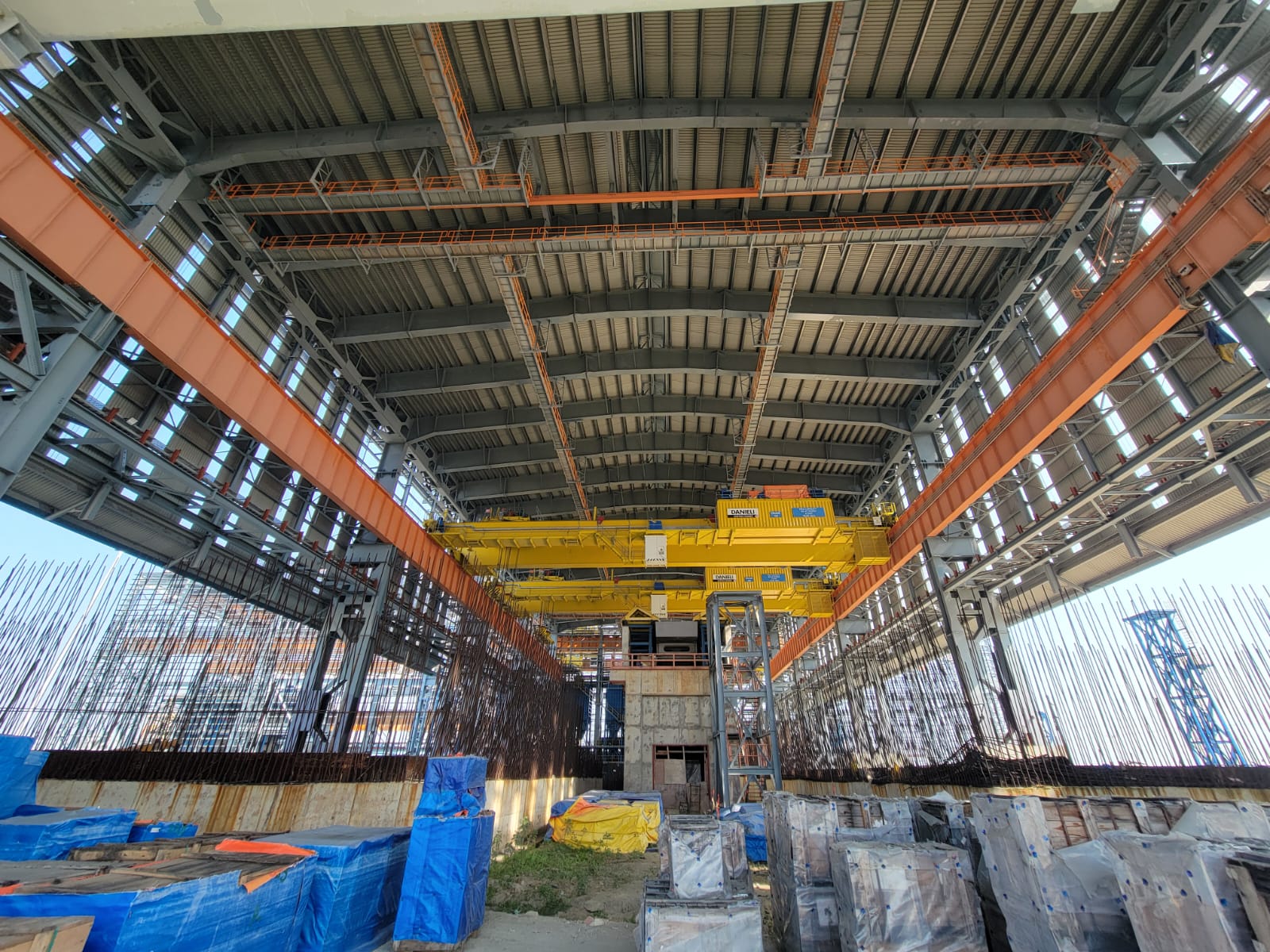
Initially scheduled for commissioning in 2024, the project’s expected completion timeline has now been pushed to the end of 2027, provided ongoing operational and financial complications are resolved.
Genesis of the Project and Key Capacity
Approved in 2022 over 70 acres of land within the Mirsarai Economic Zone, BMSIL was designed to introduce advanced, low-emission steel production technology to Bangladesh. The plant aimed to locally manufacture rebar coils and wire rods for the first time in the country, reducing import reliance and generating approximately 7,000 direct and nearly 100,000 indirect employment opportunities.
To import capital machinery, a consortium of eight banks led by Agrani Bank opened Letters of Credit (LCs) worth approximately BDT 550 crore. Subsequently, imported equipment valued at nearly BDT 500 crore arrived at Chattogram Port across 275 containers.
Regulatory Complications, Demurrage, and Devaluation
The imported machinery faced extended delays at the port following a central bank directive that categorized Bashundhara-affiliated entities as a single borrower, leading to the withholding of LC documents.
The resulting administrative deadlock led to severe financial consequences:
- Port and Shipping Demurrage: Extended container detention at the port generated approximately BDT 950 crore in demurrage and associated fees—nearly double the original BDT 500 crore value of the imported machinery.
- Currency Devaluation: LCs opened when the US Dollar stood at BDT 84–86 faced a 40 percent devaluation of the Bangladeshi Taka following global market volatility. In early 2024, financing banks demanded a one-time settlement of nearly BDT 850 crore to cover currency movement and inflation adjustments.
- Financing Gaps: A banking consortium—comprising Agrani Bank, Sonali Bank, Janata Bank, Rupali Bank, BDBL, Mutual Trust Bank, Bank Asia, and SBAC Bank—approved a BDT 2,350 crore syndicated term loan. However, only BDT 576 crore (24.51 percent) has been disbursed, leaving BDT 1,774 crore undisbursed.
- Accrued Interest: As of June 30, 2026, accrued interest and excise duties on disbursed funds and forced loans reached BDT 858 crore. BMSIL has paid BDT 411 crore to date using sponsor equity and internal funds.
Although Agrani Bank was instructed by the central bank in April 2026 to treat BMSIL independently from the directive, significant financial pressure had already accumulated.
Utility Infrastructure Costs
Project officials noted that utility infrastructure delay further compounded financial strain. Despite responsibility resting with the Bangladesh Economic Zones Authority (BEZA) and state utility providers, BMSIL paid BDT 290 crore in advance for 50-year gas, water, and power connection rights.
Due to execution delays, BMSIL spent an additional BDT 300 crore of its own funds to construct physical utility infrastructure, including BDT 250 crore for power transmission lines, BDT 40 crore for gas connections, and BDT 10 crore for water pipelines.
Industry Perspectives and Economic Outlook
Commenting on broader macroeconomic challenges, Showkat Aziz Russel, President of the Bangladesh Textile Mills Association (BTMA), noted that industrial ventures across Bangladesh faced severe strains due to currency fluctuations, high interest rates, and reduced market liquidity. He emphasized that maintaining predictable regulatory policies and smooth credit flows remains vital for industrial sustainability.
Shahed Zahid, Chief Operating Officer of Safwan Bashundhara Global (SBG), emphasized that the facility was designed to produce high-grade rebar coils and wire rods at lower operational costs while reducing carbon emissions compared to traditional manufacturing. He stated that repeated delays erode financial viability, creating immense pressure on both investors and lenders.
Industry analysts observe that overcoming supply chain bottlenecks and policy unpredictability remains critical if Bangladesh's steel sector is to achieve projected annual growth rates of 11 to 15 percent in the late 2020s. Resolving policy and administrative hurdles for major domestic industrial projects is essential to maintaining investor confidence and sustaining long-term industrialization.