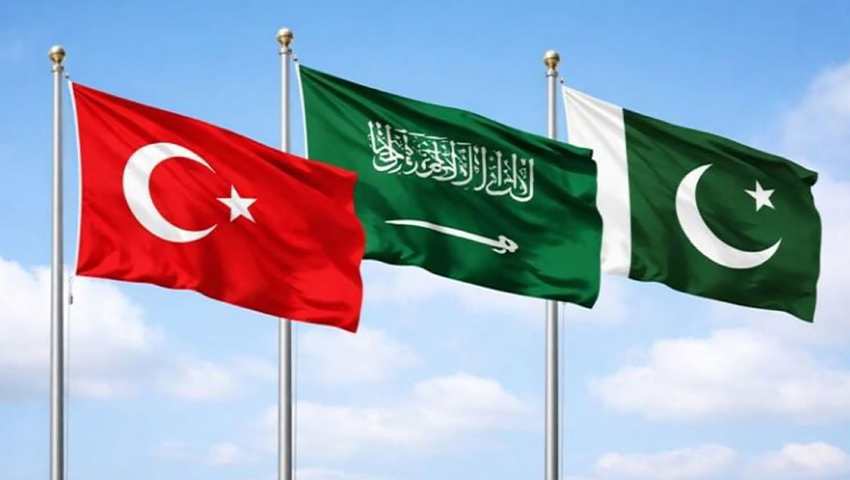
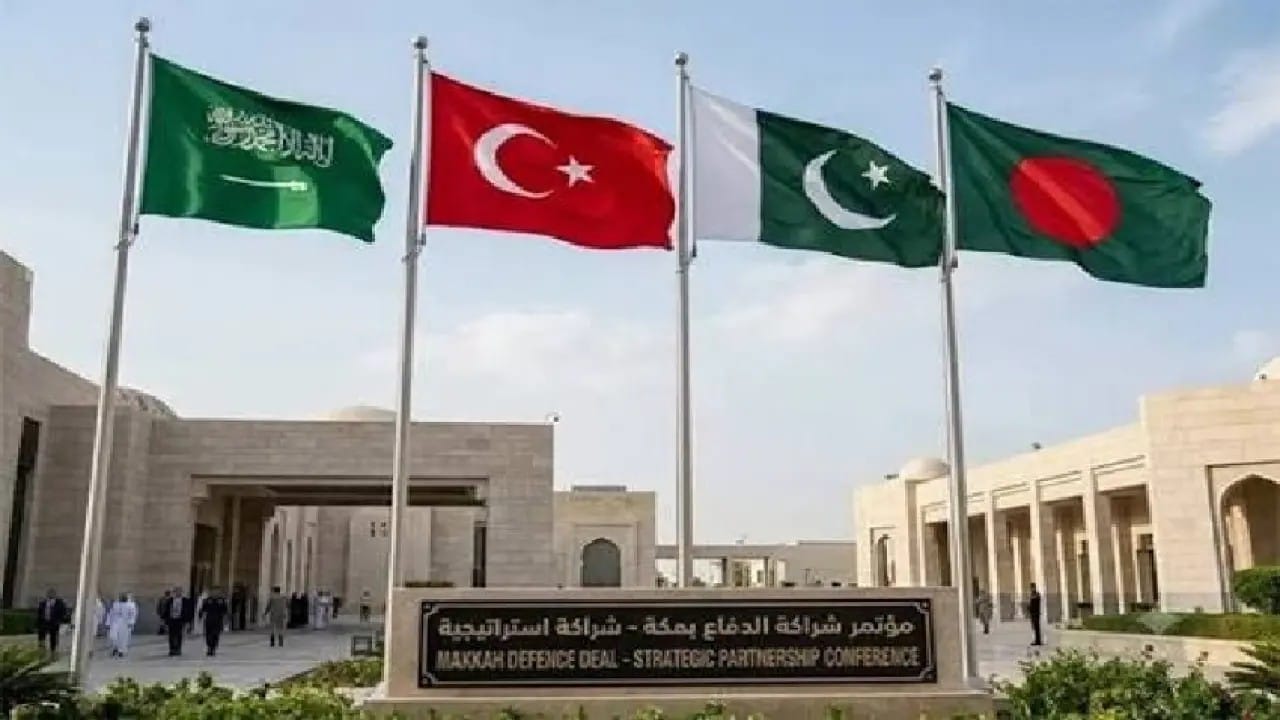
Known as the Makkah Pact, the agreement was signed in Saudi Arabia this month and includes a commitment to collective defence. Under the arrangement, an armed attack on one member could be treated as an attack on all members.
Bangladesh’s possible participation has triggered discussion in diplomatic and political circles. Foreign Affairs State Minister Humayun Kabir has reportedly said Dhaka views such an initiative positively and that Prime Minister Tarique Rahman has been invited to participate.
A source in Bangladesh’s Foreign Ministry told Reuters that Saudi Arabia had invited Bangladesh to join the pact, although the timing and details of the invitation remain unclear.
The potential move would represent a significant development in Bangladesh’s traditional foreign policy, which has generally sought to maintain balanced relations with India, China, the United States, the European Union and Middle Eastern countries without aligning itself directly with a military bloc.
The strategic implications for India are likely to be particularly sensitive. Bangladesh-India relations are already facing tensions over several issues, including border management and Dhaka’s demand for the return of former prime minister Sheikh Hasina, who is currently in India.
Against this backdrop, Bangladesh joining a defence arrangement that includes Pakistan could introduce another layer of complexity into bilateral relations with New Delhi.
Geopolitical analyst Kallol Kibriya said Bangladesh’s entry into such a military alliance could also create new calculations in its relations with China, Iran, Japan, Kuwait, Oman, Qatar, Russia, the United Arab Emirates and the United States.
He said this would not necessarily mean an immediate deterioration in relations with those countries, but Bangladesh’s strategic alignment could come under greater scrutiny.
The economic consequences would also be an important consideration. Bangladesh relies heavily on exports, foreign investment and remittances from its citizens working abroad. Its major export markets include the United Kingdom, the European Union and the United States, while millions of Bangladeshi workers in the Middle East contribute significantly to the country’s remittance earnings.
Professor Asif Shahan of Dhaka University said joining a military alliance could create risks for Bangladesh’s export-oriented economy, as the country’s economic interests depend heavily on stable trade and diplomatic relations with a wide range of partners.
At the same time, he said Bangladesh’s own security requirements and long-term strategic interests should also be considered rather than allowing the possible reactions of other countries alone to determine its foreign policy.
India’s Ministry of External Affairs has said New Delhi is closely monitoring developments in West Asia. However, the exact impact on Bangladesh-India relations would depend largely on whether Dhaka actually decides to join the pact and what form its participation would take.
For Bangladesh, the issue is therefore not simply whether to join the Makkah Pact. The larger challenge is whether Dhaka can deepen strategic cooperation with Saudi Arabia, Türkiye and Pakistan while maintaining its longstanding diplomatic balance and protecting its economic and regional interests.
Any decision to join such a defence arrangement would consequently carry significant implications for Bangladesh’s foreign policy and its relationship with India.