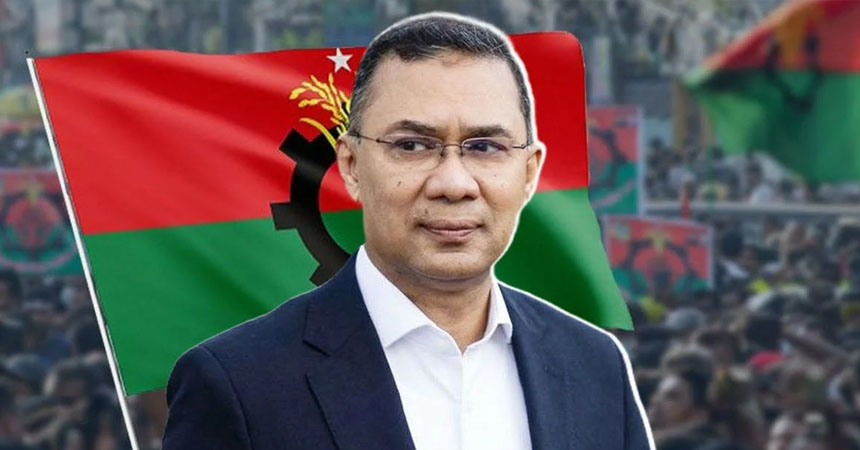
Enforcing action against two prominent leaders within less than a month marks a significant development in the country's political landscape. This stance aligns with the well-known principle articulated by Shahid President Ziaur Rahman: "The party is greater than the individual, and the country is greater than the party." Applying this doctrine internally demonstrates a commitment to transforming political rhetoric into practice.
State Minister Ishraque Hossain, a prominent young leader and son of the late freedom fighter and former Mayor Sadeque Hossain Khoka, built a strong following through his active role during prolonged anti-authoritarian movements. However, the Prime Minister's decision underscores that neither heritage nor political contributions place anyone above the law.
Earlier, MP Ferdousi Ahmed Misti was asked to resign following allegations of involvement in an attack, vandalism, and looting at the Radda MCH-FP Centre in Mirpur, Dhaka. Her resignation on October 1 was followed on Monday by the removal of Ishraque Hossain from his cabinet post, adding momentum to the discussion on governance and internal discipline.
Ishraque's dismissal highlights a key boundary regarding the conduct of elected representatives and public officials. While narcotics remain a severe social issue in Bangladesh, noble intentions do not override statutory limits or legal protocol.
The action followed a viral video showing Ishraque Hossain brandishing a firearm and directing his companions during an anti-drug operation in the Dayaganj area near the Ganderia railway station. Reports indicated that a threat was voiced, and a companion was seen kicking a young man during the incident.
Under the Constitution of Bangladesh, ministers and state ministers form part of the executive branch, but holding executive office does not automatically grant police powers to search, detain, or arrest individuals. Specific statutory authority is required for such actions. Section 21 and Section 23 of the Narcotics Control Act, 2018 restrict search and arrest powers to designated authorized officers, conferring no independent operational authority on ministers or MPs.
Similarly, possessing a valid firearm license does not permit indiscriminate brandishing. Under Section 25(a) of the Firearms Licensing, Renewal, and Usage Policy 2025, a license holder may carry and use a firearm solely for self-defense, provided it is not displayed in a manner that causes fear or distress to others. Carrying a licensed weapon does not substitute for law enforcement jurisdiction.
The central challenge in governance is establishing consistent standards. If allegations against ruling-party members are routinely investigated and acted upon through transparent, due-process mechanisms, public trust in democratic institutions and the rule of law can be restored.
Prime Minister Tarique Rahman's recent decisions present an opportunity to embed accountability as a standard practice rather than an isolated event. The ultimate test will depend on whether this standard remains consistently enforced regardless of individual clout, ensuring that national interests remain superior to political expediency.