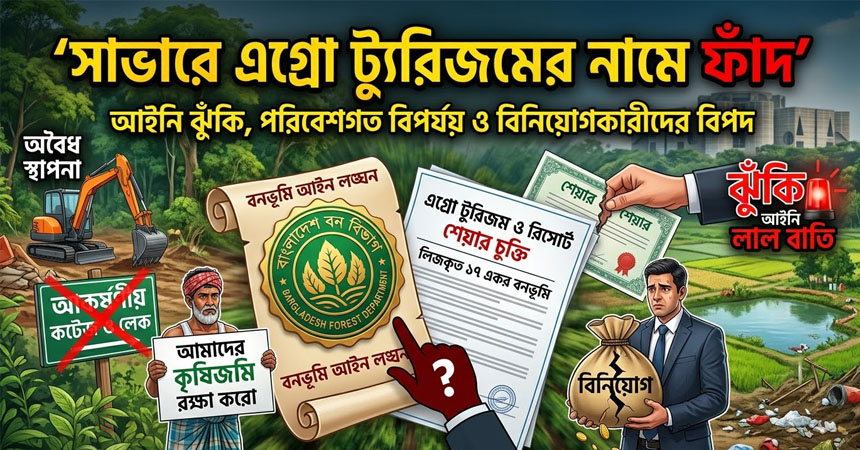
The project is reportedly being planned by a group of individuals under the banner of an agro-tourism and resort venture. While promotional materials present it as an attractive and environmentally friendly investment, questions have been raised over whether all necessary approvals have been obtained for using the land for commercial tourism activities.
One of the key concerns relates to land reportedly under the jurisdiction of the Forest Department. Legal experts and environmental stakeholders say the use of government forest land for commercial resorts or tourism projects would require clear legal authority and approval from the relevant government agencies.
Questions have also been raised over the terms under which the land was allegedly leased or allocated. If land was provided for a specific forestry or environmental purpose, using it for a commercial resort could potentially lead to legal complications, including cancellation of the arrangement or government action, depending on the terms of the agreement.
Another concern involves plans to acquire nearby agricultural land for cottages and other facilities. Environmental stakeholders fear that converting agricultural land for commercial construction could affect local agriculture and the surrounding ecosystem.
The Kamalpur area and its surroundings include forestland, agricultural plots and water bodies. Residents and environmental observers have raised concerns that increased tourist activity, construction, waste generation and noise could put additional pressure on local biodiversity and natural resources.
Questions have also been raised about the proposed investment model. According to information circulated about the project, investment could be raised by selling a limited number of shares in phases. However, concerns have been expressed over the absence of publicly available details on the project's total investment requirement, profit-sharing mechanism, land rights and the legal framework governing investors' ownership.
If a substantial portion of the project land is government or leased land, investors may not acquire ownership of that land. This could create financial risks if the project faces legal challenges or regulatory action, particularly if the relevant land-use permissions are cancelled or construction is stopped.
The project's stated objective of promoting tourism and benefiting local farmers has also drawn questions. Environmental observers say any agro-tourism initiative should ensure that agricultural land, forest resources and local livelihoods are protected rather than displaced by commercial development.
Before attracting investment, stakeholders say the project should clarify its land ownership and lease documents, land-use permissions, environmental clearance, construction approvals and financial structure. An environmental impact assessment may also be necessary depending on the project's location, scale and classification under applicable environmental regulations.
Without clear documentation and approvals from the relevant authorities, the proposed project could face regulatory or legal challenges, potentially exposing investors to financial losses.
The allegations and concerns surrounding the project would require verification of land records, lease agreements, environmental approvals and other official documents before any conclusion can be drawn about the legality of the development.