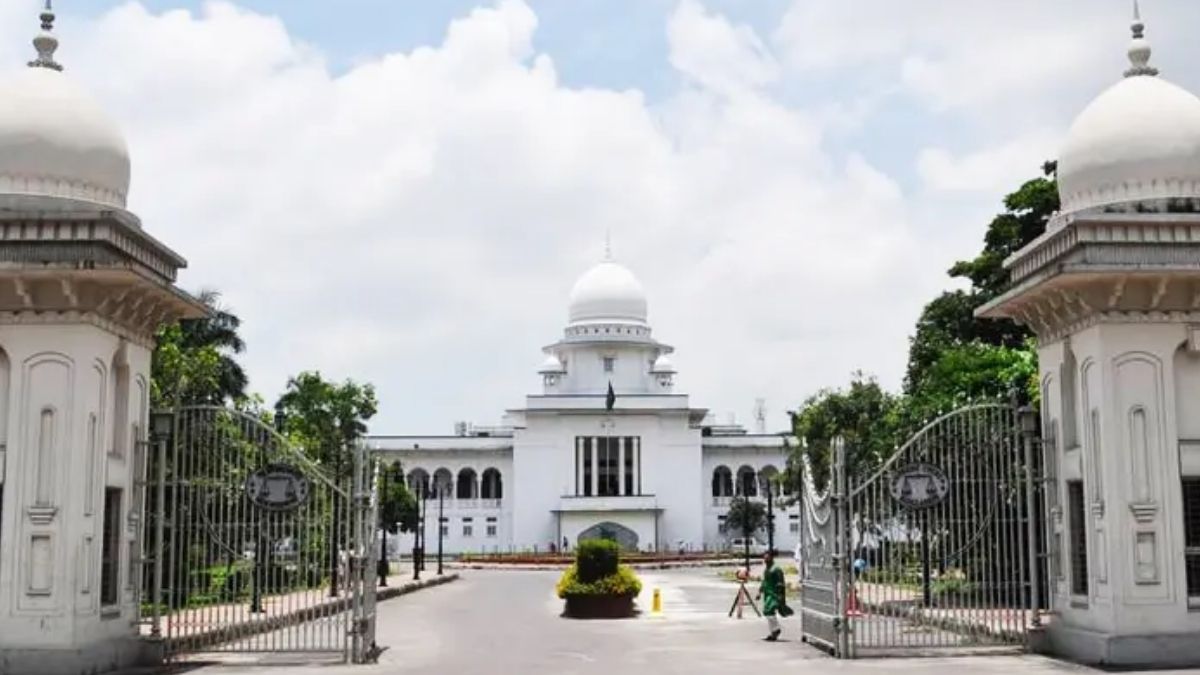
The 22 judges were appointed as additional judges on October 9, 2024. They were made permanent on November 11, 2025, roughly one year and one month after their initial appointment. The appointments were made by President Mohammed Shahabuddin in consultation with the Chief Justice under Article 95 of the Constitution.
Article 98 of the Constitution allows the President to appoint additional judges of a Supreme Court division for a period of up to two years. Importantly, the provision does not state that an additional judge must complete two years before being appointed as a permanent judge. It explicitly says that an additional judge may be appointed as a judge under Article 95.
The question being raised by some lawyers and legal experts is therefore not simply whether the Constitution permits an earlier appointment, but what evaluation process and performance criteria were applied before the 22 judges were confirmed as permanent judges.
The Supreme Court Judges Appointment Ordinance, 2025, introduced a formal framework for judicial appointments through a Supreme Judicial Appointments Council. The ordinance says that, when considering an additional High Court judge for permanent appointment, the council should consider the number of cases disposed of, the quality of judicial orders and decisions, court management, overall efficiency, integrity, reputation and other relevant matters.
The ordinance was issued in January 2025 and established the Supreme Judicial Appointments Council, headed by the Chief Justice, to assist in the appointment process. The Supreme Court later began using the new framework for judicial appointments.
The November 11, 2025 notification regularised the services of 22 of the 23 additional judges appointed in October 2024. One of the original 23, Justice Debasish Roy Chowdhury, was not included. Reports citing Supreme Court sources said he had not yet reached the minimum age of 45 required under the Supreme Court Judges Appointment Ordinance, 2025.
Twenty one of the 22 newly appointed permanent judges took their oath on November 12, 2025. Justice Syed Enayet Hossain could not attend the ceremony because he was receiving medical treatment.
The timing of the regularisation has nevertheless drawn attention because the judges had served only about 13 months as additional judges.
In earlier cases, the performance of additional judges was assessed before their permanent appointment. In a Supreme Court judgment involving a 2012 appointment, the court record shows that six additional judges submitted 10 judgments each before the expiry of their two year tenure for evaluation by senior judges of the Appellate Division. The Chief Justice subsequently recommended them for permanent appointment after considering their performance and integrity.
Against this background, questions have emerged over whether comparable performance indicators were applied in the 2025 regularisation process and whether the reasons or evaluation materials behind the recommendations should be made available.
Claims that some of the 22 judges had not authored a full judgment before their regularisation could not be independently established from the official appointment notification or the publicly available sources reviewed for this report.
The issue could attract further legal and professional scrutiny if lawyers or other affected parties challenge the process. Any such challenge would ultimately have to be assessed on the basis of the Constitution, the 2025 ordinance, the relevant appointment records and the specific facts concerning each judge.
The broader debate centres on how the higher judiciary should balance the constitutional power to appoint additional judges with a transparent and consistent system for evaluating their performance before permanent appointment.