A statement by an individual, the conduct of a public figure or even a social media post can quickly become part of a wider debate over the state, government institutions and political accountability.
Journalist, columnist and political analyst Ahsan Habib Barun argues that Bangladesh is passing through such a sensitive phase following the mass uprising of July-August 2024.
According to his analysis, as state institutions undergo efforts aimed at reform, accountability and strengthening the rule of law, highly publicised incidents are acquiring added significance. The central question, he suggests, is whether such events are merely isolated episodes or whether they are contributing to broader narratives about the effectiveness of the state and the government.
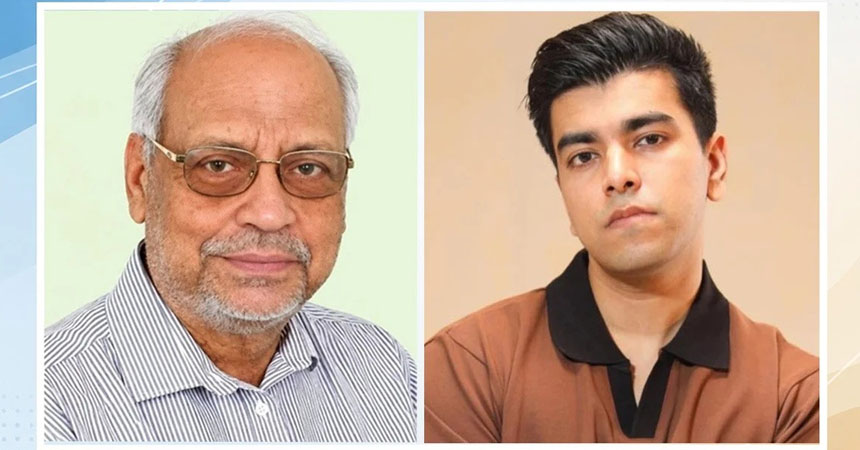
Barun has examined the recent controversies involving writer and former military officer Major (retd) Mohammad Akhtaruzzaman Ranjan and content creator Salman Muqtadir in this broader context. Although the two have different professional backgrounds and political identities, he argues that the incidents surrounding them have generated questions about institutional authority and the functioning of the state.
At the same time, the circumstances of the two cases are substantially different and any direct connection between them would require evidence.
Airport dispute and the question of protest
The author acknowledges that complaints about management at Hazrat Shahjalal International Airport are not new. Allegations of irregularities involving officials of customs, civil aviation and other agencies, along with complaints over baggage delays, immigration problems and passenger harassment, have been raised for years.
Such concerns are particularly significant for expatriate Bangladeshis returning home, who have frequently complained about baggage handling, passenger services and alleged irregularities at the airport.
From this perspective, the author argues that addressing institutional shortcomings is clearly the government's responsibility. An international airport, he notes, requires not only modern infrastructure but also efficient passenger services, security, discipline and accountability.
The more difficult question, however, is how citizens should protest when they believe an institution has failed.
Akhtaruzzaman Ranjan was arrested after a dispute at Shahjalal International Airport. According to the case filed over the incident, he was accused of threatening the airport's executive director and assaulting a security supervisor. He was subsequently produced before a court.
Dhaka Metropolitan Police's Detective Branch arrested Akhtaruzzaman on October 2 in connection with the airport case and handed him over to Airport Police.
The author argues that citizens have every right to raise complaints about public services, but that protests should remain within the boundaries of law and public conduct.
Threatening government officials with physical harm or engaging in alleged physical confrontation, he argues, cannot be considered an acceptable substitute for formal complaints, investigation and legal proceedings.
The appropriate institutional channels, according to this view, include written complaints, administrative investigations, disciplinary action and, where necessary, the courts.
The author contrasts this approach with complaints reportedly submitted by several Jamaat-e-Islami leaders after returning from Saudi Arabia. According to the article, they raised their concerns about airport services through formal complaints and social media, after which the authorities took notice.
The comparison is presented as a distinction between institutional mechanisms for addressing grievances and confrontational forms of protest.
However, the allegations surrounding the airport incident remain matters for investigation and judicial proceedings. Claims by the accused, witnesses and authorities need to be assessed against evidence before definitive conclusions can be reached.
Political identity and public conduct
The article also discusses Akhtaruzzaman's political history, including his past association with the BNP, his public comments concerning the party's leadership and his positions during the previous Awami League government.
The author argues that such background is relevant when examining how public figures' actions are interpreted in the current political environment.
But political affiliation or past political activity, by itself, does not establish involvement in any alleged offence. Any such conclusion would require specific evidence.
The broader argument is that public figures now operate in an environment where their actions can quickly influence public opinion.
Political leaders, former officials, social media personalities and other prominent figures can reach large audiences almost instantly. Young people in particular often follow social media personalities closely, meaning provocative statements or confrontational behaviour can have an impact beyond the immediate incident.
The author therefore calls for greater responsibility among people with significant public influence.
The Salman Muqtadir controversy
The recent attack on content creator Salman Muqtadir's BrownFish Studio has also become part of this wider debate.
The studio, located at the New Gini Properties development near ECB Chattar in Dhaka, was attacked, vandalised and allegedly looted on September 26. Police subsequently arrested several people in connection with the incident.
Initial police accounts pointed towards a dispute over land and property rather than an attack specifically targeting Muqtadir.
DMP officials said the studio was not the intended target and that the wider incident was linked to a dispute involving New Gini Properties and other landowners. Several suspects were arrested as the investigation progressed.
Muqtadir, however, initially described the incident as an attack connected to extortion and publicly alleged political involvement. Later accounts indicated that he himself acknowledged that no one had directly demanded money from him and suggested that the property owner may have been the primary target.
The difference between these accounts has made the motive an important issue for investigators.
Police have said they found no information establishing that the attack was an extortion incident and have instead focused on the land dispute as a possible motive.
At the same time, police have continued investigating the identities and roles of those involved. A fifth person, identified as Shah Alam Anik, was later arrested by the Detective Branch over his alleged involvement in the vandalism.
The competing accounts mean that the political allegations surrounding the incident should be treated separately from the established fact that an organised attack took place.
Social media and political narratives
The author also examines Muqtadir's public statements and alleged political positions, including his conduct during the 2024 mass movement and his earlier comments on government policies.
Such claims, however, need to be assessed against specific statements, dates and contexts rather than broad characterisations.
The article also raises allegations concerning businesses associated with Muqtadir's father-in-law and alleged links involving former Detective Branch official Harun-or-Rashid.
Those claims require separate verification through official records, investigations and judicial findings. Association or communication between individuals does not, by itself, establish criminal involvement.
This distinction is particularly important in the age of social media, where allegations can spread much faster than evidence can be examined.
Religion, politics and public behaviour
Another section of the analysis explores the relationship between Islamic ethical teachings and political conduct.
The author refers to principles such as restraint, forgiveness, respectful speech and avoidance of provocation, arguing that public political behaviour should reflect such values when political actors invoke religion and morality.
This argument is then extended to Jamaat-e-Islami and the party's response to the allegations involving Akhtaruzzaman.
According to the author's interpretation, the party's call for his unconditional release rather than an explicit condemnation of his alleged conduct raises questions about the consistency between the party's stated ethical principles and its response to political controversies.
Such an interpretation remains the author's assessment rather than an established fact.
The broader political debate
The article places the Akhtaruzzaman and Muqtadir incidents within a wider debate over Bangladesh's political transition.
The author's central argument is that confrontational behaviour towards state institutions and highly charged allegations on social media can contribute to public perceptions about the government's ability to maintain authority and ensure institutional accountability.
However, there is currently no established evidence demonstrating that the two incidents were coordinated or had a common political objective.
Any claim of a direct connection would require evidence beyond the fact that both incidents occurred during the same period of political transition.
The author also argues that social media has become one of the principal arenas where political narratives are constructed in Bangladesh.
Political actors, journalists, commentators and online personalities—both inside and outside the country—can frame individual events according to their own interpretations. As a result, verified information and independent fact-checking have become increasingly important.
Criticism of a government should not automatically be labelled propaganda, just as unverified information should not be accepted as fact simply because it is widely circulated.
Jamaat, BNP and the changing political landscape
The article also discusses the political positions of Jamaat-e-Islami, the BNP and other emerging political forces.
It raises questions about the future relationship between Jamaat and the BNP, as well as possible areas of convergence between Jamaat and the National Citizen Party.
However, claims about political alliances or strategic understandings require concrete evidence before they can be treated as established developments.
The author argues that Jamaat should maintain a constructive political role by cooperating with a government on areas of national interest while continuing to scrutinise and criticise government policies where necessary.
He also argues that Bangladesh's political parties face the challenge of balancing political competition with the need to strengthen state institutions after years of institutional weaknesses, allegations of corruption and administrative problems.
The larger question of rule of law
The two cases involving Akhtaruzzaman Ranjan and Salman Muqtadir are fundamentally different.
One involves allegations of threats and assault during a dispute at an airport, while the other concerns an attack and vandalism at a private studio whose exact motive remains under investigation.
Whether the two incidents should be interpreted as part of a common political narrative is ultimately a matter for political analysis. But a more fundamental question remains: should the law apply equally to everyone?
Political leaders, former military officers, content creators and ordinary citizens should all be subject to the same legal standards when allegations of wrongdoing arise.
Likewise, allegations made on social media should be tested through evidence. Government institutions should respond to criticism with facts and transparency, while demonstrably false or misleading claims should be addressed through lawful mechanisms.
For Bangladesh, the central challenge at this political juncture is therefore not simply the conduct of particular individuals or parties. It is the restoration of public confidence in institutions, the rule of law and standards of political conduct.
After a prolonged period of political instability and institutional controversy, the country's transition towards a new political and institutional framework will require disputes to be addressed through evidence, law, accountability and democratic processes rather than confrontation, personal attacks or unverified social media narratives.