
If implemented transparently and consistently, the initiative could offer a new model for reducing the scope for influence, lobbying and alleged financial transactions in government postings.
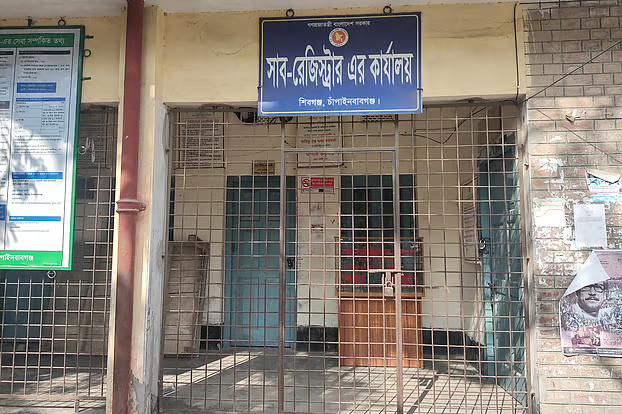
The Ministry of Law, Justice and Parliamentary Affairs recently announced that sub-registrars would be posted through a lottery system to bring greater transparency to the transfer process. Under the arrangement, sub-registrars currently working at registration offices in different parts of the country will be selected through a lottery for designated posts at registration offices in Dhaka district.
The lottery is scheduled to be conducted at the conference room of the Law Ministry in the presence of Law, Justice and Parliamentary Affairs Minister Mohammad Asaduzzaman.
The issue of corruption surrounding government transfers and postings is not new in Bangladesh. Allegations of financial transactions and lobbying for preferred positions have surfaced at different levels of public administration, particularly in offices dealing with land-related services.
The post of sub-registrar is also considered vulnerable because of the large volume of property registration and related financial transactions handled by registration offices. There have been allegations that officials seek postings in locations considered financially lucrative through lobbying or other forms of influence.
If an official has to spend money or rely on improper influence to secure a particular posting, critics argue, there is a risk that the official may later seek to recover that expenditure through corrupt practices. Ultimately, such practices can increase the burden on ordinary service recipients.
The concerns extend beyond sub-registrars. Allegations of irregularities in transfers and postings have surfaced in various government agencies, particularly over preferred workplaces, strategically important positions and locations perceived as financially attractive.
Similar allegations have emerged over postings in law enforcement agencies. Questions have also been raised at different times about the process of assigning officers to important police stations and other sensitive positions.
The judiciary has also faced periodic scrutiny over allegations concerning transfers and postings of lower-court judges. Any proven financial manipulation in such a sensitive area could have serious implications for public confidence in the justice system.
The controversy surrounding government postings became particularly visible during the tenure of the interim government led by Prof Muhammad Yunus. In 2024, allegations of financial transactions related to the appointment of deputy commissioners sparked public controversy and prompted government investigations.
In September that year, the Ministry of Public Administration formed a committee to investigate an allegation involving a Tk30 million cheque reportedly linked to a DC posting.
The controversy intensified after media reports alleged financial transactions involving senior public administration officials in connection with DC appointments. The government subsequently formed a high-level committee to examine the allegations. However, the then Public Administration Secretary Mokhles Ur Rahman rejected the allegations as false, while the government said the claims would be investigated.
The DC posting episode also exposed tensions within the administration. In September 2024, officials were involved in a confrontation at the Secretariat over DC appointments, following which the government cancelled the appointments of eight DCs and initiated a probe. A subsequent committee recommended disciplinary action against 17 deputy secretaries over their involvement in the incident.
Such episodes have contributed to broader questions about how government postings are decided and whether the existing system provides sufficient safeguards against undue influence.
Similar concerns have been raised over important positions in the Forest Department, Public Works Department, Roads and Highways Department and Local Government Engineering Department. Certain districts and workplaces are often considered more desirable, creating competition among officials for those positions.
The health sector has also faced allegations of transfer-related irregularities. Doctors posted outside Dhaka have frequently sought transfers to the capital, reflecting the country's broader administrative and economic concentration in Dhaka. This has contributed to persistent pressure for postings in the capital and allegations of lobbying and financial transactions.
Large-scale transfers in the Directorate General of Health Services during the interim government's tenure also drew attention. The movement of thousands of medical officers and hundreds of employees raised questions about the impact of frequent transfers on staffing at district and upazila-level health facilities.
The larger issue is the country's continuing Dhaka-centric administrative structure. A significant number of government employees prefer to work in the capital, but if too many officials are concentrated in Dhaka, maintaining adequate public services outside the capital becomes increasingly difficult.
Healthcare, administration, law enforcement, land services and engineering are among the sectors where the effects of this concentration can be seen.
Against this backdrop, the lottery system for sub-registrars could be viewed as an administrative experiment aimed at reducing discretion in transfers and postings.
Its principal advantage would be to reduce the scope for personal influence, lobbying and alleged financial transactions in determining where an officer is posted. If eligible officials are selected transparently from a predetermined list, the process could become more predictable and less vulnerable to external pressure.
However, a lottery by itself cannot eliminate corruption.
Experts and stakeholders say a transparent transfer system should also consider professional qualifications, performance, disciplinary records, staffing requirements and the length of an officer's tenure at a particular workplace.
The lottery process itself should be publicly verifiable, technology-based and auditable. Clear eligibility criteria, a publicly available list of eligible officers and an independently verifiable selection mechanism would help strengthen public confidence in the system.
If the experiment proves effective, similar mechanisms could be considered for other categories of government postings, subject to the nature and requirements of each position.
For example, a transparent system could potentially be developed in which officials meeting predetermined criteria are included in an eligible pool and postings are determined through a rules-based mechanism. Such an approach could also be considered, where appropriate, for transfers of police officers, doctors and other public servants.
A system that ensures officials receive postings without having to rely on money or personal influence could also strengthen accountability. Officers would have fewer grounds to view a posting as a personal investment that needs to be recovered.
The lottery initiative should therefore be seen as more than simply a change in the transfer procedure for sub-registrars. It could provide an opportunity to test whether greater transparency and automation can reduce discretion in a traditionally sensitive area of public administration.
The government's own official records show that sub-registrar transfers remain an active administrative process, with transfer orders continuing to be issued during 2026.
For the lottery system to become a sustainable reform, however, the process would need to be implemented consistently and evaluated regularly. Any loopholes that allow manipulation before or after the lottery would also need to be addressed.
Ultimately, reducing corruption requires more than stronger laws or harsher punishment. It also requires removing structural opportunities that allow irregularities to occur.
If transfers and postings are one such area, making the process transparent, predictable and auditable could be an important part of administrative reform.
The sub-registrar lottery, therefore, represents a potentially significant first step. Its long-term impact will depend not only on how the first lottery is conducted, but also on whether the system remains transparent, rule-based and free from subsequent interference.