
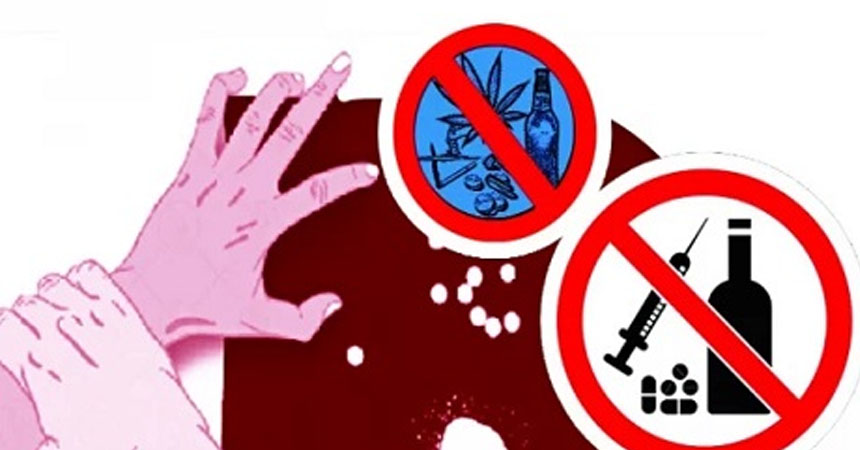
The government, led by Prime Minister Tarique Rahman, has instituted a zero-tolerance policy toward drug proliferation. Effective and unyielding implementation of this policy holds the potential to drastically improve law and order, mitigate severe economic losses, and safeguard future generations. Freeing Bangladesh from the curse of narcotics will significantly accelerate the country's developmental trajectory.
According to World Health Organization (WHO) estimates cited in policy discussions, drug abuse and smoking inflict an annual economic loss exceeding $10 billion in Bangladesh. Narcotics-induced health crises erode public vitality and drain workforce productivity, driving countless individuals out of the active labor market. Beyond the profound personal and family grief, this erosion directly suppresses national productivity, proving that drug abuse is not merely a public health crisis but a major impediment to economic advancement.
Furthermore, narcotics are inextricably linked to rising criminality. The desperate financial demands of addiction frequently drive individuals into theft, mugging, armed robbery, and violent crimes, while large-scale drug trafficking sustains organized crime syndicates. Most alarming is the devastating toll drugs take on the younger generation—the demographic intended to serve as the nation's economic engine and future leadership—who are increasingly derailed by addiction.
International precedents demonstrate that rigorous legislation, impartial legal enforcement, and steadfast state oversight are critical to controlling narcotics. Singapore’s founding father and former Prime Minister, Lee Kuan Yew, viewed illicit drugs as a primary catalyst of criminality, asserting that maintaining a safe, orderly society is impossible without suppressing drug expansion. His government's resolute approach materialized in the landmark Misuse of Drugs Act of 1973, which mandated capital punishment for drug trafficking and the possession of quantities exceeding specified thresholds. Despite international criticism, Lee defended the law as vital to national security and social stability, empowering the Central Narcotics Bureau with sweeping investigative and enforcement powers. Through rigorous enforcement and absolute state control, Singapore established itself as one of the world's most successful nations in suppressing narcotics.
Several other countries enforce severe penalties for drug offenses. Malaysia mandates the death penalty for specific drug trafficking offenses alongside stringent prison terms and fines for possession and consumption. Saudi Arabia, Kuwait, Qatar, and Indonesia similarly apply capital punishment or severe judicial penalties for narcotics trafficking, reflecting a broad regional consensus on the destructive nature of the drug trade.
The United States has long treated drug control as an issue of national security and public health, launching its formalized "War on Drugs" under President Richard Nixon in 1971 to dismantle supply networks and protect communities. However, the efficacy and human rights dimensions of American policies have been subject to prolonged international debate. Conversely, the aggressive anti-drug campaign pursued by former Philippine President Rodrigo Duterte—which resulted in numerous extrajudicial killings between 2016 and 2022—drew severe global condemnation and ultimately led to his arrest and trial before the International Criminal Court (ICC) in The Hague in 2025. The Philippine experience serves as a stark reminder that disregarding human rights and due process in the guise of drug control ultimately breeds institutional crisis and lawlessness.
In the context of Bangladesh, the imperative for robust drug control is acute. Although anti-drug laws exist, historical deficiencies in their impartial enforcement have allowed powerful drug syndicates to embed themselves across urban and rural communities. Children, adolescents, and youth face unprecedented exposure to drug accessibility, threatening national creativity, labor capacity, and moral standards.
The nexus between narcotics and violent crime is increasingly visible. Beyond funding crimes through theft, the drug trade fuels territorial conflicts, homicides, illegal arms trafficking, and smuggling. The proliferation of juvenile delinquency—particularly the alarming rise of violent "adolescent gangs"—is directly fueled by the easy availability of narcotics. Criminologists agree that dismantling drug supply and distribution networks is the single most effective way to suppress general crime rates.
Past administrations announced sweeping crackdowns, but deeply entrenched political patronage and corruption repeatedly undermined operations, with narcotics kingpins occasionally exploiting political affiliations to secure immunity or public office. Prime Minister Tarique Rahman’s administration has reversed this trend by placing drug eradication at the forefront of national governance, directing the Home Ministry and law enforcement agencies to execute comprehensive nationwide operations.
While recent intelligence reports indicate the finalization of targeted lists containing hundreds of high-level godfathers and thousands of prime drug traffickers, enforcement alone is insufficient. Judicial backlogs, witness intimidation, and evidentiary gaps frequently allow arrested traffickers to secure bail and evade definitive punishment. Under current laws, capital punishment is prescribed for severe drug offenses, but deterrence requires reliable investigations, robust evidence collection, accelerated judicial trials, and the systematic dismantling of illicit financial assets and political protectors backing these syndicates.
Sustaining a successful anti-narcotics campaign requires transforming state crackdowns into a broad-based social movement. Families, educational institutions, religious organizations, and local government representatives must unite in community mobilization, awareness building, and rehabilitation. Members of Parliament can spearhead localized task forces to rid their constituencies of drug networks. Crucially, addicts must be treated as patients requiring medical treatment and reintegration rather than treating them solely as criminals.
Expanding the implementation of mandatory drug testing—such as enforcing rigorous 'dope tests' for commercial vehicle drivers, public service recruitment, university admissions, and sensitive professional roles—can serve as a powerful deterrent, provided personal privacy and scientific accuracy are strictly maintained. Above all, political parties across the spectrum must establish a national consensus to permanently sever ties with drug lords and traffickers, ensuring that no criminal can shelter behind political patronage.
The economic vitality, social fabric, and security of future generations in Bangladesh depend directly on winning the war against drugs. This campaign cannot be treated as a temporary drive; it demands an enduring, unwavering state commitment. Backed by rigorous legal enforcement, impartial justice, political resolve, community awareness, and rehabilitation support, the current government has a historic opportunity. Achieving a drug-free Bangladesh is synonymous with securing a prosperous, safe, and productive nation.