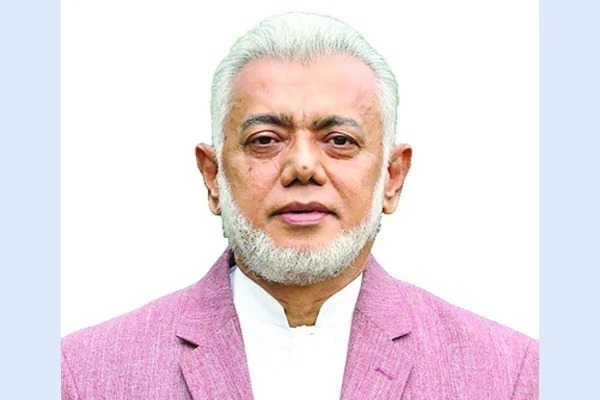
To revive the sector, Real Estate and Housing Association of Bangladesh (REHAB) President Dr Ali Afzal has called for reducing home loan interest rates to 5 per cent, providing developers with loans at single-digit interest rates, lowering apartment registration costs and promoting affordable housing through public-private partnerships.
He warned that without effective policy support, the livelihoods of around five million people associated with the sector could face greater risks.
Dr Ali Afzal, managing director of Krishibid Group and chairman of Glorious Lands and Developments Ltd, discussed the sector’s current challenges, barriers to investment and ways to make housing more affordable. He said housing should not be viewed merely as a business but as a basic human need and an important component of the national economy.
Rising construction costs squeeze developers
According to the REHAB president, rising construction material prices have deepened the crisis. He claimed that construction material costs increased by around 31 per cent amid war-related disruptions, followed by a further 12 per cent rise, bringing the cumulative increase to approximately 43 per cent.
However, developers have been unable to raise apartment prices in line with the higher costs, leaving many companies facing financial losses.
Afzal said real estate projects take years to complete. Buyers often sign purchase agreements several years in advance and pay in instalments. When construction materials and other expenses become more expensive after an agreement is signed, developers are generally still obligated to hand over apartments at the previously agreed prices.
As a result, companies must absorb the additional costs, he said.
While large developers may have some financial capacity to withstand prolonged pressure, small and medium-sized firms are finding it increasingly difficult to cope. Some projects have already been suspended, while several companies have reduced their workforces, he added.
High interest rates and weaker purchasing power dampen demand
Afzal identified declining purchasing power, high borrowing costs and economic uncertainty as major reasons behind the slowdown in apartment sales.
He said interest in buying homes had not disappeared, but apartments had become unaffordable for many people at prevailing market prices.
Taking out a home loan at high interest rates has become increasingly difficult for middle-income families. At the same time, uncertainty over the future economic outlook is discouraging many potential buyers from making large investments.
According to Afzal, the sector’s difficulties began to intensify during the Covid-19 pandemic and were compounded by subsequent political and economic uncertainty, which affected the investment climate.
He also expressed concern about foreign investors’ uncertainty over whether they would be able to repatriate their invested capital and profits.
Around 270 linked industries affected
The impact of the downturn extends well beyond apartment developers. According to the REHAB president, around 270 industries are linked to the housing sector, including steel rod, cement, ceramics and furniture manufacturers.
The real estate industry is a major buyer of products from these businesses. A decline in apartment construction therefore reduces demand for construction materials and related goods, affecting sales and production across the supply chain.
Afzal warned that declining business activity could also make it more difficult for companies in related industries to repay bank loans, potentially extending the effects of the housing slowdown to the wider economy.
He estimated that around five million people work in or are associated with the housing sector. As projects are delayed or suspended, companies are laying off employees. However, he said he did not have a precise figure for the number of people who had lost their jobs so far.
Registration costs make apartments less affordable
High registration costs and related taxes and fees are another major obstacle for prospective apartment buyers, Afzal said.
According to him, apartment registration and associated taxes and fees can account for approximately 11 to 16 per cent of the property’s value. These additional expenses increase the total cost of homeownership and put further pressure on buyers.
He said some purchasers delay registering their apartments because of the high costs. A system based on actual market values, combined with more affordable registration charges, could benefit buyers and encourage timely registration.
Reducing the costs could also increase the number of registered transactions and create opportunities to boost government revenue, he added.
Afzal also called for simplifying the approval process for housing projects. He proposed fully digitising government services related to land and building plan approvals, arguing that delays and irregularities increase project completion times and construction costs.
Ultimately, these additional expenses are passed on to apartment buyers, he said.
Calls for 5pc home loan rates and cheaper developer financing
To make housing more accessible to middle-income families, Afzal proposed reducing interest rates on long-term home loans to 5 per cent.
Lower borrowing costs would improve buyers’ purchasing power and help revive demand for apartments, he said.
He also suggested setting home loan rates according to regional economic conditions. Under his proposal, interest rates could be relatively higher in Dhaka, lower in district towns and around 1 per cent in upazilas and rural areas.
Such a geographically differentiated lending system could encourage people to live outside the capital and ease pressure on Dhaka’s population and housing market, he argued.
Afzal also called for loans to developers at single-digit interest rates. Access to lower-cost financing would help companies complete ongoing projects and encourage them to undertake new developments despite rising construction expenses.
Public-private partnerships proposed for affordable housing
Afzal said the government should support the housing sector with the broader objective of ensuring affordable homes rather than treating it solely as a profit-driven industry.
He proposed long-term public-private partnership initiatives to expand affordable housing opportunities. Instead of indiscriminate conversion of agricultural land for housing, unused government land could be developed in a planned manner, combining public land resources with private-sector investment and expertise.
Such an approach could help deliver housing at comparatively affordable prices, he said.
He also stressed that housing policy should not remain centred on Dhaka. Better road connectivity between the capital and surrounding districts and upazilas could make commuting easier, encourage people to live outside the city and reduce pressure on housing demand in the capital.
Government support needed to revive the sector
Afzal called on the government to provide effective support to businesses affected by the downturn. Measures such as loan rescheduling, interest waivers and low-interest financing must reach the companies that genuinely need assistance, he said.
He argued that targeted action on construction costs, home loan interest rates and apartment registration expenses could help restore momentum to the sector. Reducing delays in government services and creating a more favourable investment environment would also be essential.
According to the REHAB president, the crisis cannot be resolved without coordinated efforts by the government, banks and real estate businesses.
A combination of well-designed policy support and affordable financing could revive apartment demand, help related industries recover and protect the livelihoods of millions of people who depend on the housing sector, he said.