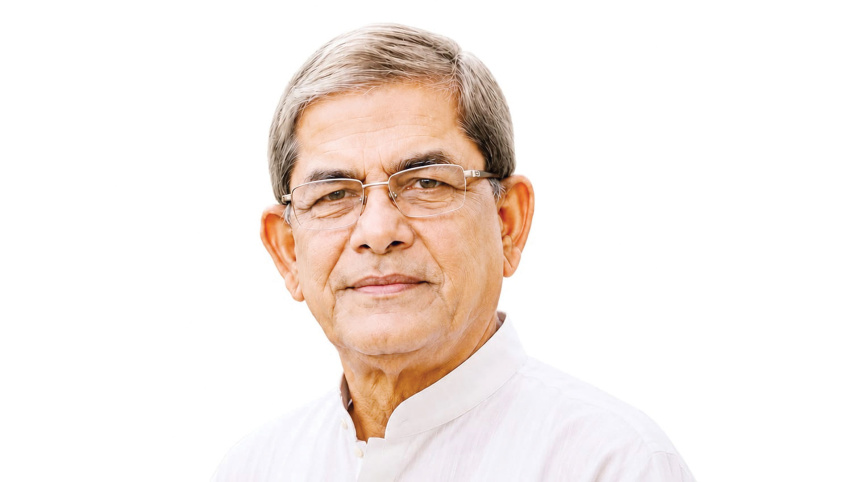
The decision by the ruling Bangladesh Nationalist Party (BNP) to nominate Mirza Fakhrul Islam Alamgir for the presidency has been met with widespread political consensus, given his long, uncontroversial career. Throughout his decades in public life, he has maintained a reputation as an unblemished, refined, and principled politician.
At 78, Mirza Fakhrul remains steadfast in his political principles. Renowned for his humble demeanor and polite speech, he stands out as a unique figure in a contemporary political arena often dominated by aggressive rhetoric.
By nominating Mirza Fakhrul Islam Alamgir for the highest constitutional office, the BNP has demonstrated strategic political foresight. Through this choice, the party has not only honored a veteran leader committed to his ideals throughout his life, but has also reinforced the dignity and stature of the presidency—representing a significant milestone for principled, courteous, and healthy politics.
In modern political discourse, defining the ideal politician yields a long list of attributes: absolute integrity, distance from corruption and criminalization, deep trust among workers and the general public, and the capacity for self-sacrifice during times of crisis. While such a combination of qualities is increasingly rare in contemporary politics, observers note that Mirza Fakhrul’s life and political trajectory reflect these principles in practice.
Mirza Fakhrul’s political journey began during his student days at the University of Dhaka, where he completed his Bachelor's and Master's degrees in Economics. He actively participated in student politics as a member of the then East Pakistan Students' Union and served as the General Secretary of its S.M. Hall branch. During the historic 1969 Mass Uprising, he led the organization's Dhaka University unit as its President.
Upon completing his academic career, Mirza Fakhrul entered the teaching profession in 1972, serving with distinction at several government institutions, including as a Professor of Economics at Thakurgaon Government College until 1986. Leaving academia to enter mainstream politics, he was elected Chairman of the Thakurgaon Municipality in 1988.
He subsequently joined the BNP during the anti-autocracy movement against the military regime of Hussain Muhammad Ershad. At a time marked by political shifts, Mirza Fakhrul responded to the call of Khaleda Zia and took to the streets. He was appointed President of the Thakurgaon District BNP in 1992. Rising through the party's grassroots levels, he became Senior Joint Secretary General in 2009, Acting Secretary General in 2011, and was elected Secretary General at the party’s sixth national council in 2016.
From the 1/11 political crisis through subsequent turbulent periods, Mirza Fakhrul served as a central organizer for his party. Facing numerous legal cases, repeated imprisonments, and political pressures, he maintained organizational discipline. His leadership proved vital in keeping the party united and sustaining political programs during the prolonged absence or confinement of top leaders.
Across the political spectrum, Mirza Fakhrul is widely recognized as a courteous leader who maintains respect toward political opponents. At a time when younger generations often face a shortage of positive political role models, his career offers an example of dedication, education, and public service.
Political analysts and observers consider the nomination of an educated, tested, and veteran leader like Mirza Fakhrul to the presidency a stabilizing development for the nation, expressing confidence that his assumption of office will provide the country with a balanced and respected constitutional head of state.